Let’s face it: our kitchen countertops often become a battleground, constantly fighting a losing war against clutter. Among the chief culprits? That perpetually overflowing dish drying rack, taking up valuable real estate right next to your sink. But what if I told you there’s a sleek, out-of-sight solution that can revolutionize your kitchen’s functionality and aesthetics? Enter the under cabinet dish drying rack, a game-changer for anyone seeking a tidier, more organized cooking space. This innovative kitchen essential goes beyond simply holding your freshly washed dishes; it integrates seamlessly into your cabinetry, offering a sophisticated and practical answer to countertop chaos.
|
Our Picks for the Best Dish Drying Rack in 2026
As an Amazon Associate I earn from qualifying purchases.
|
||
| Num | Product | Action |
|---|---|---|
| 1 | Kenmore Loxdell Expandable Full Size Rust Resistant Dish Rack with Drain Board and Flatware Caddy |

|
| 2 | KitchenAid Large Capacity Full Size Rust Resistant Dish Rack with Angled Drain Board and Removable Flatware Caddy, Light Grey |
|
| 3 | Chicmount 6 Pcs Kitchen Organizer Accessories Set 2 Tier Bamboo Collapsible Dish Drying Rack with Utensil Holder Dish Drying Plate Rack and Mat for Cabinet Pot Lid, Bowl, Cup, Chopsticks, Utensils |
|
| 4 | 7 code Large Dish Drying Rack for Kitchen Counter, Detachable Large Capacity Dish Drainer Organizer, 2-Tier Dish Racks with Utensil Holder, Black |
|
| 5 | Urackify Dish Drying Rack - Extendable Dish Drainer, Large Dish Rack for Kitchen Counter, Rustproof Dish Strainer with Utensil Holder and Cups Holder, 1 Tier Black |
|
| 6 | Kitsure Large Dish Drying Rack - Extendable Dish Rack, Multifunctional Dish Rack for Kitchen Counter, Anti-Rust Dish Drainers with Cutlery & Cup Holders 19.2\"-26.7\" L x 12.9\" W, Black |
|
| 7 | SNTD Dish Drying Rack, Expandable Dish Rack for Kitchen Counter, Stainless Steel Dish Drainer with Drainboard Set and Utensil Holder (Black) |
|
| 8 | SNTD Dish Drying Rack - Extendable Dish Rack, Large Sink Drying Dish Drainer for Kitchen Counter, Stainless Steel Dish Strainer with Utensil Holder (Black) |
|
| 9 | SAYZH Dish Drying Rack - Stainless Steel Dish Rack for Kitchen Counter, Large-Capacity Dish Drainer with Cutlery Holder, Kitchen Organizer for Dishes, Spoons and Forks, Black |
|
| 10 | Kitsure Dish Drying Rack for Kitchen Counter, Stainless Steel Sink Organization and Storage Essentials with Cutlery Holder, Home and Appartment Decor, 12\'\'W x 15.5\'\'L, Black |
|
Why Go Under Cabinet? The Unseen Benefits
Thinking about moving your dish drying operation behind closed doors? You’re on the right track! An under cabinet dish drying rack isn’t just about hiding dirty dishes; it’s about transforming your kitchen experience.
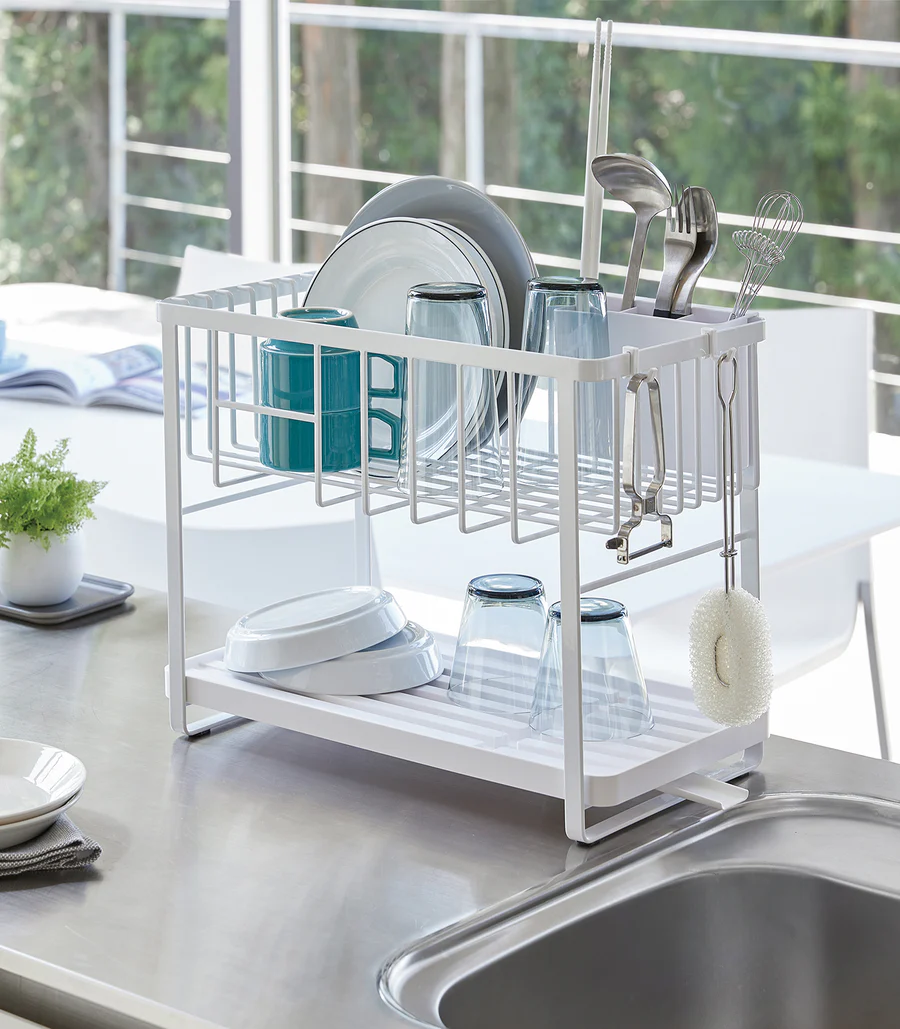
What makes under cabinet dish drying racks a game-changer?
Under cabinet dish drying racks are a smart upgrade for modern kitchens, offering a multitude of benefits that traditional countertop racks simply can’t match.
First and foremost, they are space-saving superstars, helping you reclaim your valuable countertop real estate. Imagine having all that cleared space for food prep, small appliances, or simply a clutter-free view! This alone can make a small kitchen feel significantly larger and more inviting.
Beyond practicality, these systems offer enhanced aesthetics, keeping your kitchen looking sleek and tidy by reducing visual noise. There’s something undeniably satisfying about a clean, unobstructed countertop. It elevates the entire feel of your home.
“A well-designed kitchen prioritizes both form and function,” notes Emily Watson, a seasoned Interior Design Specialist. “Concealed drying solutions, like under cabinet racks, perfectly embody this principle, creating a sense of calm and order that open racks often disrupt.”
Furthermore, they contribute to improved hygiene. Dishes dry more quickly with better airflow compared to being left flat on a mat, which helps reduce the growth of bacteria or mildew that can occur with prolonged dampness. This means not only cleaner dishes but also a fresher-smelling cabinet environment.
Under cabinet racks are also incredibly versatile, designed to handle a variety of items beyond just plates. Think utensils, delicate stemware, baking sheets, and even bulky pots and pans—all drying efficiently and discreetly. The quiet efficiency of drying out of sight until the dishes are ready to be stored is truly a minor luxury that makes a big difference in daily life.
Types of Under Cabinet Dish Drying Racks to Consider
The term “under cabinet” can encompass a few clever designs, each with its own advantages. Choosing the right one depends on your kitchen layout, your drying habits, and how much modification you’re comfortable with.
Pull-Out Dish Racks for Base Cabinets
These are arguably the most common type of integrated under cabinet dish drying rack. They often live beneath your kitchen sink, utilizing that prime cabinet volume. The beauty here is the potential for direct plumbing connections to drain accumulated water, which is fantastic for preventing moisture buildup within the cabinet structure—a key concern with any concealed drying system. Some designs even allow for converting a deep base cabinet drawer into a horizontal drying zone, keeping heavy stacks of plates low and easily accessible.
- Pros: Excellent drainage, out-of-sight storage, convenient for heavier items.
- Cons: Requires dedicated cabinet space, potential for more complex installation if plumbing is involved.
Vertically Retracting Racks for Upper Cabinets
Imagine a dish rack that magically disappears upwards! Some models are ingeniously designed for over-sink installation, retracting vertically into the upper cabinet space. This solution instantly clears your countertop when the rack isn’t in use, making it ideal for those who value every inch of visible counter space.
- Pros: Completely clears the countertop, highly innovative, visually appealing.
- Cons: Often more complex installation, requires specific upper cabinet dimensions, might have lower capacity for very tall items.
Simple Cabinet-Mounted Drying Shelves
For a more straightforward approach, you can install narrow shelves or racks inside existing upper cabinets. These essentially create “drying zones” where you can stack clean dishes vertically until they’re fully dry and ready to be put away. While not always equipped with integrated drainage like pull-out systems, they excel at keeping items out of sight and utilizing otherwise wasted vertical space.
- Pros: Simpler installation, cost-effective, great for maximizing existing cabinet space.
- Cons: May require manual emptying of drip trays or rely on air drying without direct drainage, typically less robust.
Key Factors When Choosing Your Under Cabinet Dish Drying Rack
Selecting the perfect under cabinet dish drying rack is more than just picking the first one you see. It involves thoughtful consideration of materials, measurements, and practical features to ensure it seamlessly integrates into your daily kitchen routine.
Material Matters: Durability Meets Design
The material of your dish drying rack is crucial, especially since it’s constantly exposed to moisture. You want something that can stand the test of time and dampness.
- Stainless steel (304-grade) is the undisputed champion for rust and corrosion resistance. It’s the preferred choice for areas with high humidity and frequent water exposure, offering superior longevity and a sleek look.
- Chrome-plated wire can be a more budget-friendly option, but be cautious. Its durability hinges on the quality of the plating. If the coating gets scratched, rust can quickly develop on the underlying steel.
Regardless of the rack material, the importance of removable plastic or silicone drip trays cannot be overstated. These trays are vital for collecting water and protecting your cabinet base from moisture damage, preventing warping or mold growth.
Sizing It Right: Measure Twice, Install Once
This is arguably the most critical step for any built-in solution. Accurate measurement prevents headaches and ensures a perfect fit.
- Start by measuring the clear interior width, depth, and height of your cabinet opening. Always use the smallest point of obstruction as your reference.
- For the width, remember to account for the thickness of the mounting hardware. You’ll typically need a rack that’s 1 to 2 inches narrower than the cabinet opening itself.
- The depth measurement dictates the maximum length of the sliding mechanism. Standard full-extension slides require clearance behind the track when fully retracted, so the rack depth needs to be several inches less than the cabinet depth.
- When measuring height, allow for at least 1 inch of vertical clearance above your tallest dish to ensure smooth retraction and avoid scraping the cabinet frame.
- For under-sink installations, you must carefully measure around any existing plumbing, such as drain pipes or disposal units, to ensure your chosen rack size doesn’t conflict.
Capacity and Weight Limit
Consider your household’s typical dish load. Are you a single person, a couple, or a busy family of five? Most standard pull-out units can handle a static load of 25 to 50 pounds, which is usually sufficient for a full load of household dinnerware. However, always verify the manufacturer’s specified weight limit, especially if you plan to dry heavy stoneware, cast iron, or large cutting boards. Matching the rack’s capacity to your needs will prevent overloading and potential damage.
Drainage Systems: Keeping Moisture at Bay
The hidden nature of an under cabinet dish drying rack means its drainage system is paramount. Good drainage is your first line of defense against moisture buildup and, crucially, mold.
Some advanced models offer direct-to-plumbing drainage, channeling water straight into your sink’s pipes. This is the gold standard for convenience and moisture prevention. Others rely on removable drip trays that collect water. If you choose a tray-based system, commit to regularly emptying and cleaning the tray. Proper ventilation within the cabinet is also key to ensuring dishes dry efficiently and the cabinet remains dry.
Installation Tips for a Seamless Setup
Installing an under cabinet dish drying rack can be a rewarding DIY project, but it does require precision and the right tools.
What tools do I need to install an under cabinet dish drying rack?
Before you begin, gather your essentials: a drill, screwdrivers, a tape measure, and a bubble level. Having these on hand will ensure a smoother, more accurate installation.
A Step-by-Step Overview
- Measuring and Marking: Use your precise measurements to mark the exact placement of the sliding tracks inside your cabinet.
- Drilling Pilot Holes: Always drill pilot holes before driving mounting screws, especially if working with particleboard, to prevent splitting the cabinet material.
- Securing Sliding Tracks: Position and secure the sliding tracks, typically to the cabinet base or sidewalls. Use your level to ensure they are perfectly parallel and straight; this prevents the rack from binding or sliding unevenly.
- Attaching the Rack Frame: Once the tracks are secure, attach the rack frame to the sliding mechanism. Many designs use clip-on or drop-in features for quick assembly.
- Testing Smooth Retraction: Before loading it up, perform a smooth retraction check. Make sure the slides operate properly and that the rack clears the cabinet face frame when pulled out and pushed in. Final adjustments to the slide alignment may be needed to achieve seamless movement, even with a full load of dishes.
Expert Insight: Avoiding Common Pitfalls
“Precision is non-negotiable when installing a pull-out system,” advises Michael Lee, a Home Appliance Engineer. “Ensuring the tracks are perfectly parallel and straight from the start prevents binding issues and premature wear. Don’t rush the measuring and leveling steps, as these dictate the long-term functionality of your rack.” If the installation seems too complex or beyond your comfort level, don’t hesitate to consult a professional carpenter or kitchen installer. It’s an investment in the longevity and flawless operation of your new kitchen feature.
Maximizing Life and Hygiene: Care and Maintenance
An under cabinet dish drying rack, like any kitchen appliance, thrives with proper care. Regular maintenance ensures its longevity and maintains a hygienic drying environment. Make it a habit to clean the rack and especially the drip tray regularly. Food particles and mineral deposits from water can accumulate, leading to odors or even mold if neglected. Ensure that the cabinet area has adequate airflow, perhaps by leaving the cabinet door slightly ajar for a short period after drying a large load, to prevent any lingering moisture. If you opted for a chrome-plated wire rack, be vigilant about any scratches, and address them promptly to prevent rust from forming.
FAQ
Are under cabinet dish drying racks prone to mold?
Not if properly selected and maintained. Models with direct drainage or effective, regularly emptied drip trays, combined with good cabinet ventilation, significantly reduce the risk of mold.
Can I install an under cabinet dish drying rack myself?
Yes, with basic tools like a drill, screwdrivers, tape measure, and a level, many models can be installed by a DIY enthusiast. However, complex pull-out or vertically retracting systems might benefit from professional installation.
What’s the best material for a concealed dish drying rack?
For superior durability and resistance to rust and corrosion in moist kitchen environments, 304-grade stainless steel is highly recommended as the top material choice.
How do I measure my cabinet for a pull-out dish rack?
Measure the interior width, depth, and height of your cabinet opening, being sure to account for any mounting hardware and leaving at least 1 inch of vertical clearance above your tallest dish for smooth operation.
Are these racks only for small kitchens?
While incredibly beneficial for maximizing space in smaller kitchens, under cabinet dish drying racks are also excellent for larger kitchens, offering a sleek, minimalist aesthetic by keeping countertops completely clear.
Conclusion
The under cabinet dish drying rack is more than just a place to dry dishes; it’s a strategic enhancement for any kitchen seeking to balance unparalleled functionality with sophisticated design. By moving the drying process off your countertops and into a cleverly integrated system, you unlock precious space, elevate your kitchen’s aesthetic appeal, and maintain a more hygienic environment. From robust stainless steel pull-out units to innovative vertically retracting designs, there’s a solution to fit every home and lifestyle. Take the time to consider your kitchen’s unique needs, measure accurately, and choose a high-quality under cabinet dish drying rack. It’s a simple change that promises a tidier, more organized, and ultimately more enjoyable cooking space.