Let’s face it, doing dishes is rarely anyone’s favorite chore. Even with a trusty dishwasher, there’s always a collection of hand-wash-only items, delicate stemware, or oversized pots and pans that need a dedicated spot to air dry. This is where a fantastic dish drying rack becomes an unsung hero in your kitchen, transforming a cluttered, wet countertop into an organized, efficient drying zone. Finding the Best Dish Drying Rack isn’t just about utility; it’s about reclaiming your counter space, enhancing hygiene, and even adding a touch of style to your culinary sanctuary.
Why a Great Dish Drying Rack is a Kitchen Essential
A great dish drying rack is essential because it offers an organized, hygienic, and space-saving solution for air-drying dishes, preventing water accumulation and speeding up the drying process. Imagine a kitchen where every hand-washed item, from your favorite coffee mug to that oversized mixing bowl, has its designated place, drying efficiently without leaving puddles or taking over your precious counter space. That’s the promise of the best dish drying rack. These clever kitchen tools are designed not only to hold your wet items securely but also to facilitate optimal airflow, drastically reducing drying time and minimizing the risk of water stains or mildew buildup.
Alysha Fenn, CEO of Making Space Today, emphasizes the practical benefits: “Most dish drying racks are designed to hold kitchenware standing up for quicker drying, especially compared to laying dishes flat. This also saves a lot more space and ensures everything dries completely.”
Unpacking the Different Types of Dish Drying Racks
When it comes to selecting the best dish drying rack, you’ll quickly discover a world of designs, each tailored to different kitchen sizes, dishwashing habits, and aesthetic preferences. Understanding the various types is the first step toward finding your perfect match.
Countertop Dish Racks: The Classic Choice
These are likely what first comes to mind when you picture a dish rack. Countertop models offer substantial capacity and sturdy support, ideal for households that frequently hand-wash a variety of items. They often come with integrated drainboards and dedicated slots for plates, bowls, and cutlery, making them incredibly versatile. The trade-off? They do occupy a fixed footprint on your counter. Many modern designs, however, come with clever features like swivel spouts to direct water directly into your sink, ensuring your countertops stay dry.
Over-the-Sink Solutions: Reclaiming Your Counter Space
For those with limited counter space, over-the-sink dish racks are a game-changer.
There are generally two types:
- Roll-Up Mats: These flexible, silicone-coated stainless steel grids lay flat over your sink, providing a temporary drying area. They are incredibly compact, rolling up for easy storage when not in use. “A roll-up rack is incredibly versatile; it’s not just for drying dishes but can double as a trivet or even extra prep space,” notes Michael Lee, a Home Appliance Product Engineer. Their heat-resistant properties add to their multi-functionality.
- Standing Over-the-Sink Racks: Often two-tiered, these larger structures sit directly over your sink, utilizing vertical space. They’re excellent for maximizing capacity without sacrificing an inch of counter real estate. While they offer ample room for dishes, glasses, and even cutting boards, ensure you measure your sink and faucet clearance before committing to one of these taller models.
Foldable and Collapsible Racks: Smart for Small Kitchens
If you prefer a minimalist kitchen aesthetic or only need a dish rack occasionally, foldable or collapsible models are an excellent choice. These designs can be easily tucked away in a cabinet or drawer when not in use, instantly decluttering your kitchen. While their capacity might be slightly less than a full-size permanent rack, their convenience and space-saving benefits are unmatched, especially for smaller households or apartments. The OXO Good Grips Foldaway Dish Rack, for instance, is praised for its ability to fold down compactly while still holding a surprising amount of items.
Two-Tiered Drying Racks: Double the Drying Power
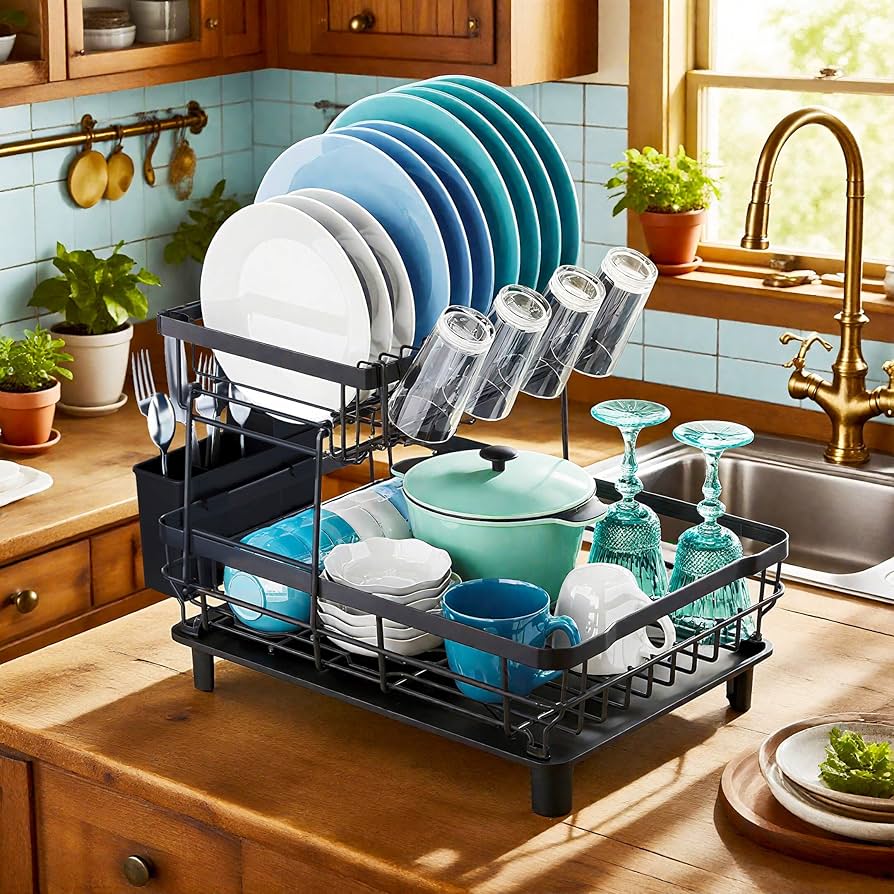
Need serious drying capacity but short on horizontal space? Two-tiered dish drying racks are designed to maximize vertical space. With multiple levels for dishes, cups, and even cookware, these racks are perfect for larger families or those who frequently host. While they offer significant capacity, a common consideration is that water from the top tier can drip onto items below, potentially slowing down the drying process for the lower items. Look for models with smart drainage to mitigate this.
Dish Drying Mats: A Simple and Flexible Alternative
For a budget-friendly and highly flexible option, dish drying mats, often made from microfiber or silicone, are ideal. They protect your countertops from water and scratches and can be easily rolled up and stored. While they don’t offer the vertical organization of a rack, they are perfect for delicate items or as supplementary drying space. “Fabric mats should be quick-drying to avoid water buildup, which can lead to mold and mildew,” advises Alysha Fenn.
How to Pick the Best Dish Drying Rack for Your Home
Choosing the best dish drying rack involves more than just picking the first one you see. It’s about aligning its features with your specific kitchen layout, dishwashing habits, and personal preferences.
When selecting your ideal dish drying rack, consider your kitchen’s available space, the types of dishes you wash, the material’s durability and ease of cleaning, and efficient drainage systems to keep your counters dry.
Size and Capacity: Matching Your Dishwashing Habits
Before you buy, take a moment to consider how much space you have available and how much you want the rack to occupy. “If you have limited counter space, opt for a smaller model or one that can be folded up for storage,” suggests Alysha Fenn. If you primarily hand-wash large pots, pans, or frequently cook for a crowd, a full-size or two-tier rack might be necessary. Conversely, for a few delicate items or supplementing a dishwasher, a compact, foldaway, or over-the-sink model could be perfect. Always measure your counter and sink space beforehand to ensure a seamless fit.
Material Matters: Durability and Hygiene
The material of your dish drying rack plays a significant role in its longevity and ease of maintenance.
- Stainless steel is a popular choice for its rust-resistance, durability, and sleek appearance. Many top-rated racks feature stainless steel frames.
- Plastic or silicone components are often found in drainboards and dividers. They are generally lightweight, affordable, and often dishwasher-safe, making cleaning a breeze.
- Bamboo offers an elevated, natural aesthetic but typically requires hand-washing and proper drying to prevent mold. It’s gentle on dishes but may lack dedicated utensil slots.
Drainage Systems: Keep Your Counters Dry
Effective drainage is non-negotiable for a truly great dish drying rack. Look for features like:
- Angled drain boards: These guide water directly into your sink.
- Swivel spouts: Allowing you to position the rack flexibly while still draining into the sink.
- Hydrophilic coatings: Some plastic trays are designed to spread water evenly for faster drying, preventing residue buildup.
Avoiding water pooling is key to preventing mold, mildew, and countertop damage.
Extra Features and Accessories: Enhancing Functionality
The best dish drying rack often comes with thoughtful extras that boost convenience:
- Utensil holders: Keep forks, knives, and spoons organized and upright for quick drying.
- Wine glass racks: Securely hold delicate stemware.
- Cutting board slots: Provide dedicated space for larger, flat items.
- Adjustable dividers: Offer flexibility for various dish sizes.
These small additions can significantly improve your dishwashing routine.
Ease of Cleaning: A Crucial Consideration
A product designed for clean dishes must itself be easy to clean. “Different materials may require different methods, so read the care instructions first,” advises Alysha Fenn. Many stainless steel and plastic racks feature removable parts that are dishwasher-safe, simplifying maintenance. Wood components, however, will almost always require hand-washing. Regular cleaning prevents unsightly mineral buildup, mold, and mildew, ensuring your rack remains sanitary and effective.
Expert Tips for Using and Maintaining Your Dish Drying Rack
Keeping your dish drying rack in tip-top condition ensures it serves you well for years to come and maintains kitchen hygiene.
To use your dish drying rack effectively, always load items for optimal airflow, ensure proper drainage into the sink, and clean it regularly according to its material’s care instructions to prevent mold and buildup.
Firstly, always load your dishes so that air can circulate freely around them. This means standing plates upright in their slots and inverting cups and bowls to prevent water from collecting. Secondly, ensure your rack’s drainage system is working efficiently. If it has a drainboard, position it so water flows directly into the sink. If it’s an over-the-sink model, confirm it’s securely placed.
For maintenance, cleaning is paramount. Lisa Yakas, a trained microbiologist specializing in consumer products, recommends a regular cleaning and sanitization cycle, ideally daily for heavy users, but at least weekly. She notes, “If you see water pooling for long periods, notice a smell, or see visible grime, then wash and sanitize it right away before next use.” For most stainless steel and plastic racks, disassembling and putting components in the dishwasher (top shelf) is often an option. Wooden racks or parts will need to be hand-washed with soap and water and thoroughly dried to prevent warping or mold. Lastly, always place your rack near the sink and away from any potential contaminants like cleaning chemicals or raw food prep areas.
The Undeniable Benefits of a Thoughtfully Designed Dish Rack
Investing in the best dish drying rack for your kitchen brings a multitude of advantages beyond just air-drying dishes. It’s about cultivating a more efficient, hygienic, and aesthetically pleasing kitchen environment. A well-designed rack promotes faster drying by maximizing airflow, reducing the time wet items spend on your counters and minimizing the risk of water spots and bacterial growth. It keeps your kitchen organized by providing designated spots for various items, preventing clutter and the need to constantly wipe down surfaces. This not only saves you time and effort but also contributes to a cleaner, more sanitary cooking space. Ultimately, the right dish rack elevates your daily routine, turning a necessary chore into a more streamlined and pleasant experience.
Frequently Asked Questions About Dish Drying Racks
Q: Why do I need a dish drying rack if I have a dishwasher?
A: Even with a dishwasher, a dish drying rack is incredibly helpful for hand-wash-only items like delicate stemware, large pots and pans, or specialty tools that don’t fit in the machine. It provides a safe, organized place for these items to air dry, preventing clutter and ensuring proper drying.
Q: How often should I clean my dish drying rack?
A: Microbiologist Lisa Yakas suggests daily cleaning for frequent use, but at least weekly is crucial. If you notice water pooling, a smell, or visible grime, clean and sanitize it immediately. Regular cleaning prevents mildew and bacterial buildup.
Q: Are dish drying racks sanitary?
A: Yes, dish drying racks are sanitary, provided you place clean dishes on them and clean the rack regularly. They are often more hygienic than drying dishes with a kitchen towel, which can harbor bacteria if not frequently washed.
Q: What is the best material for a dish drying rack?
A: The “best” material depends on your priorities. Stainless steel is highly durable and rust-resistant. Plastic and silicone are often more affordable and dishwasher-safe. Bamboo offers a stylish, eco-friendly option but requires more diligent hand-washing.
Q: Can I use a dish drying rack for more than just dishes?
A: Absolutely! Many modern dish drying racks, especially over-the-sink roll-up models, are designed to be versatile. They can serve as extra counter space, a produce colander, or even a trivet for hot pots and pans due to heat-resistant materials.
Q: What’s the difference between an over-the-sink and a countertop rack?
A: An over-the-sink rack sits directly above your sink, utilizing vertical space to free up countertop real estate, often rolling up for storage. A countertop rack sits beside your sink on the counter, typically offering higher capacity but occupying permanent surface space. Both aim to efficiently dry dishes.
Conclusion
Choosing the best dish drying rack is a small decision with a big impact on your kitchen’s functionality and aesthetic. By considering the various types, materials, drainage systems, and thoughtful features, you can find a solution that not only meets your practical needs but also complements your lifestyle. Whether you opt for a space-saving over-the-sink design, a robust countertop model, or a flexible collapsible option, the right dish rack will transform your dishwashing routine from a dreaded chore into a seamless, organized part of your kitchen rhythm. Take the time to evaluate your specific requirements, and you’ll soon discover the perfect best dish drying rack that keeps your kitchen tidy, efficient, and sparkling clean.